

It was in the very early days of her career that Darlene Mattiske-Wood first developed a deep interest in the principles of social science. More specifically, she was fascinated by how relationships and communities shaped behavior.
In a workplace environment, her attention turned to organizational structures, leadership, culture and working conditions.
“Over time, that interest led me to develop a model for improving organizational performance and growth, working through and with people,” she tells The CEO Magazine. “I have consistently found that organizations achieve faster, sustainable and stronger performance, when strategy is grounded in an understanding of people.”
That means aligning employees and customers around a shared purpose and embedding that alignment throughout every stage of the organization’s growth and transformation, according to Mattiske-Wood.
“This is not about just applying people’s considerations as a change-management activity,” she stresses. “It requires taking a deeper, more anthropological view: understanding how people behave as individuals and within groups and teams, what motivates them, what influences their decisions, and how those drivers evolve over time.”
The model she developed has been put to good work in several organizational transformations, most recently that of Australian Military Bank where she now holds the position of CEO.
Sustainable strategy
When Mattiske-Wood took the helm of Australian Military Bank in 2020, the organization was facing significant challenges, with transformation essential to its future sustainability and relevance.
“We needed to strengthen performance, modernize the organization and make difficult choices over several horizons,” she recalls.
With limited resources compared to larger competitors, her approach centered on strategic focus, organizational alignment and a renewed sense of purpose.
“In a smaller bank you need to get creative and combine strategy while harnessing the power of your people,” she says. “That means having a laser-like focus on priorities.”


Central to the transformation was a new strategic plan that narrowed the bank’s target market, eliminating 80 percent of its potential customer base to concentrate on serving members and their unique careers.
“Trying to be all things to all consumers when you have a clear target market is not a recipe for success,” she explains.
The results were compelling. By the 2025 financial year, profits had more than doubled, the cost-to-income ratio had fallen by 10 percent and employee engagement had reached 88 percent.
“These results demonstrate that strong commercial discipline can be achieved through a leadership approach grounded in people and mutuality,” she notes.
Success blueprint
The transformation model Mattiske-Wood has developed is aligned to the ethoses of Neural Leadership, Mutuality and Mutual Banking (banking that exists to serve members who are serving and protecting society). Her model centers on community and people.
“Mutuality changes the fundamental question from ‘How do we maximize value from people?’ to ‘How do we create value with and for people?’” she says. “Neural leadership brings that same principle into the way an organization is led.”
For Australian Military Bank, mutuality extends far beyond its ownership structure, she explains. It represents a commitment to the communities it serves and a responsibility to future generations.
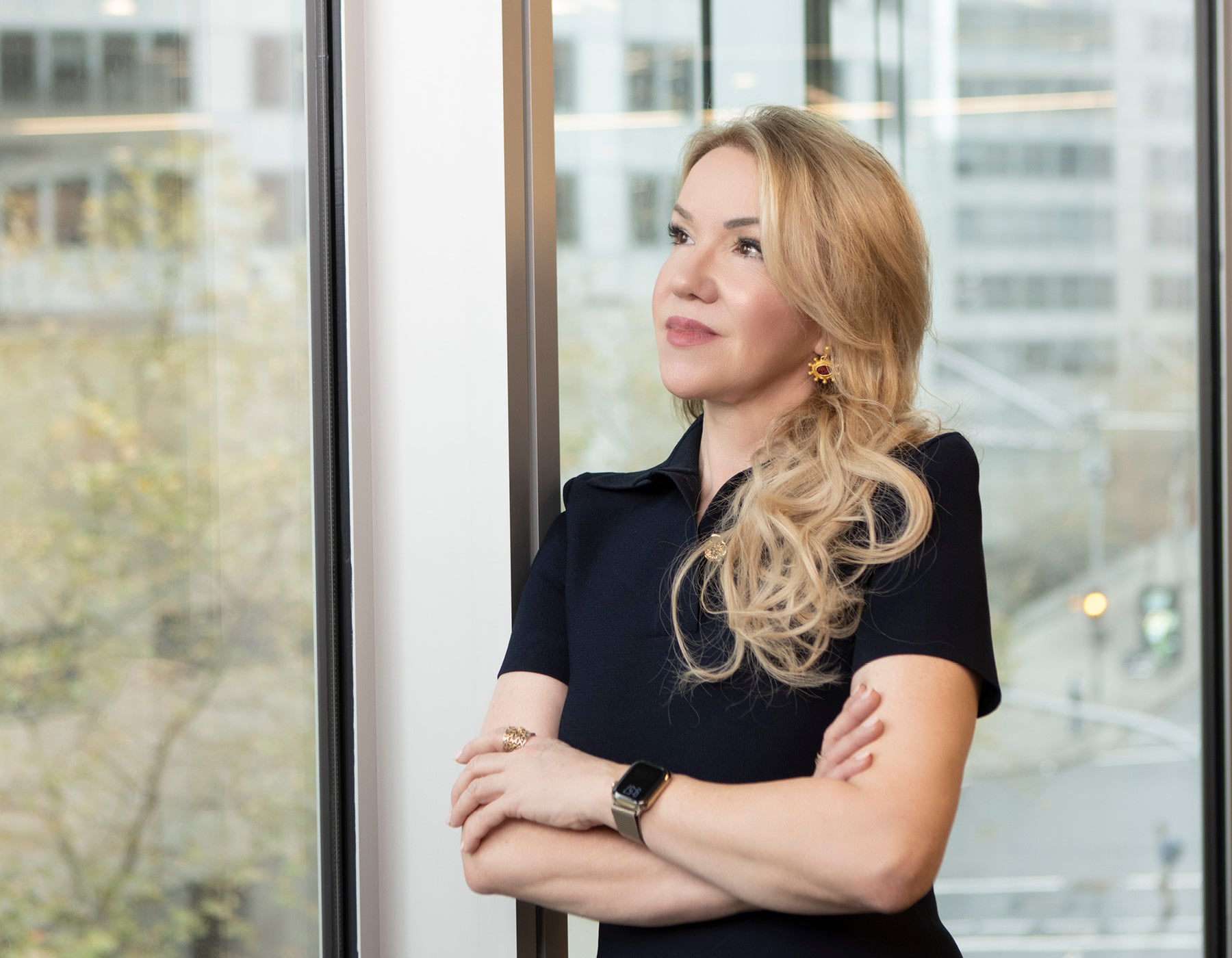

This philosophy is particularly relevant to the bank’s defense community, whose members face unique challenges, from frequent relocations and family separation to additional caring responsibilities.
“Our purpose therefore requires us to think beyond the provision of banking products and consider how our capability, partnerships and commercial strength can contribute to the resilience of the communities we serve,” Mattiske-Wood says.
By fostering partnerships and supporting community-led solutions, Australian Military Bank seeks to demonstrate how commercial sustainability and social responsibility can work hand in hand.
“This is where mutuality offers a powerful model. It recognizes that people are interdependent and that we carry responsibility for one another, particularly for those who are most vulnerable,” she explains, highlighting the potential for organizations and communities to collaborate in creating lasting, shared value.
The CEO pipeline
But also on Mattiske-Wood’s radar is another conundrum – the underrepresentation of women in the pipeline to leadership roles. Research has shown that 80 percent of CEO pipeline roles are held by men.
“Despite the higher female levels of tertiary education and strong to equal levels of workplace participation, women are systematically filtered out before CEO level,” she says.
“Many women are in lower-level operational roles, or in leadership positions even at executive level, they tend to be more in HR, legal or marketing and less in finance and CEO pathway roles.”


Major roadblocks for women include breaks to have children and the ongoing expectation that they will be the primary caregiver within the household. That means they find it harder to accrue the kind of 25–30-year career with demonstrated consistency working a 60–80 hour week in peak years that is still expected from a potential CEO.
“I have researched to understand if countries with more subsidized or free childcare have increased levels of CEO participation for women,” Mattiske-Wood says. “While heavily subsidized childcare does support families and women, CEO progression is centered on deeply ingrained cultural biases.”
Her view is that leadership pathways should actively identify and develop talented women, not simply avoid penalizing them for non-linear careers.
“Many organizations value female talent but fail to find them early in their career and provide access to operational, financial, risk and profit-and-loss roles and create the sponsorship and flexibility needed for women to demonstrate their capability, over time,” she says.
After all, building a high-performance culture must build trust and capability, both among employees and customers, according to Mattiske-Wood.
“When people understand the purpose, feel trusted to contribute, are given the skills and tools to deliver and are held accountable for clear outcomes, engagement and commercial performance strengthen one another,” she concludes.


