

A leader gathered hundreds of employees for a company-wide meeting. The organization had been under pressure for months. Rumors of layoffs were circulating. Employees were worried about their jobs, their families and their futures.
The leader opened with a simple statement: “This is not a layoff meeting.”
He spent several minutes talking about the work the team had accomplished together. He spoke about projects they had completed and successes they had shared.
Then he became emotional. He cried. Another executive cried too. Less than 10 minutes after the meeting began, they simply closed the Teams meeting.
Employees were left staring at their screens trying to make sense of what had just happened. What did the leaders know? What weren’t they saying? Were layoffs coming? Was the company in trouble?
Nobody knew for sure. And that’s exactly the problem.
Transparency requires clarity
The issue wasn’t the tears. The issue wasn’t even the uncertainty. The issue was that employees were left alone to make meaning of both.
As leaders, we often underestimate what uncertainty does to people. When we’re inside the executive team, uncertainty can feel strategic. We discuss possibilities, contingencies, financial realities, legal considerations and future scenarios. We understand that not every question has an answer yet.
Employees experience uncertainty differently. While leaders may be discussing financial scenarios and future possibilities, employees are often wondering how they will pay their mortgage, maintain healthcare coverage (if this is tied to their employment), save for retirement, afford their children’s education and support the people who depend on them.
What feels like a business decision in the boardroom often feels deeply personal everywhere else.
This is where many leaders unintentionally make a costly mistake. They focus on managing information while employees are trying to manage fear.

What feels like a business decision in the boardroom often feels deeply personal everywhere else.
Sometimes leaders genuinely don’t know what is going to happen next. Other times they know more than they can legally disclose. Mergers, acquisitions, layoffs and organizational restructures often involve restrictions that prevent leaders from sharing information before decisions are finalized.
Employees understand that. What they struggle with is feeling as though leadership is communicating around reality instead of helping them navigate it.
The question becomes: What do leaders do when they cannot provide the answers people want?
Too often, they either avoid communication altogether or communicate in ways that increase anxiety without increasing understanding.
Avoiding misinterpretation and offering certainty
The problem isn’t that leaders lack information. The problem is that employees are left alone to interpret the signals leaders send.
When a leader cries, employees naturally ask themselves why. When leaders speak about accomplishments in the past tense, employees notice. When a meeting is called to address anxiety but ends without meaningful clarity, people begin filling in the blanks themselves. And assumptions are almost always more frightening than reality.
In my work with leaders, I’ve found that trust rarely erodes because people receive bad news. Trust erodes when people believe they’re being left alone to make sense of what’s happening.
People don’t need leaders to eliminate uncertainty. That’s often impossible. They need leaders to acknowledge it. They need leaders to help them understand what is known, what isn’t known, what decisions remain outstanding and when additional information will be available.
That might sound like: “Here’s what we know.” “Here’s what we don’t know.” “Here’s what we’re waiting to learn.” “Here’s when we’ll update you again.”
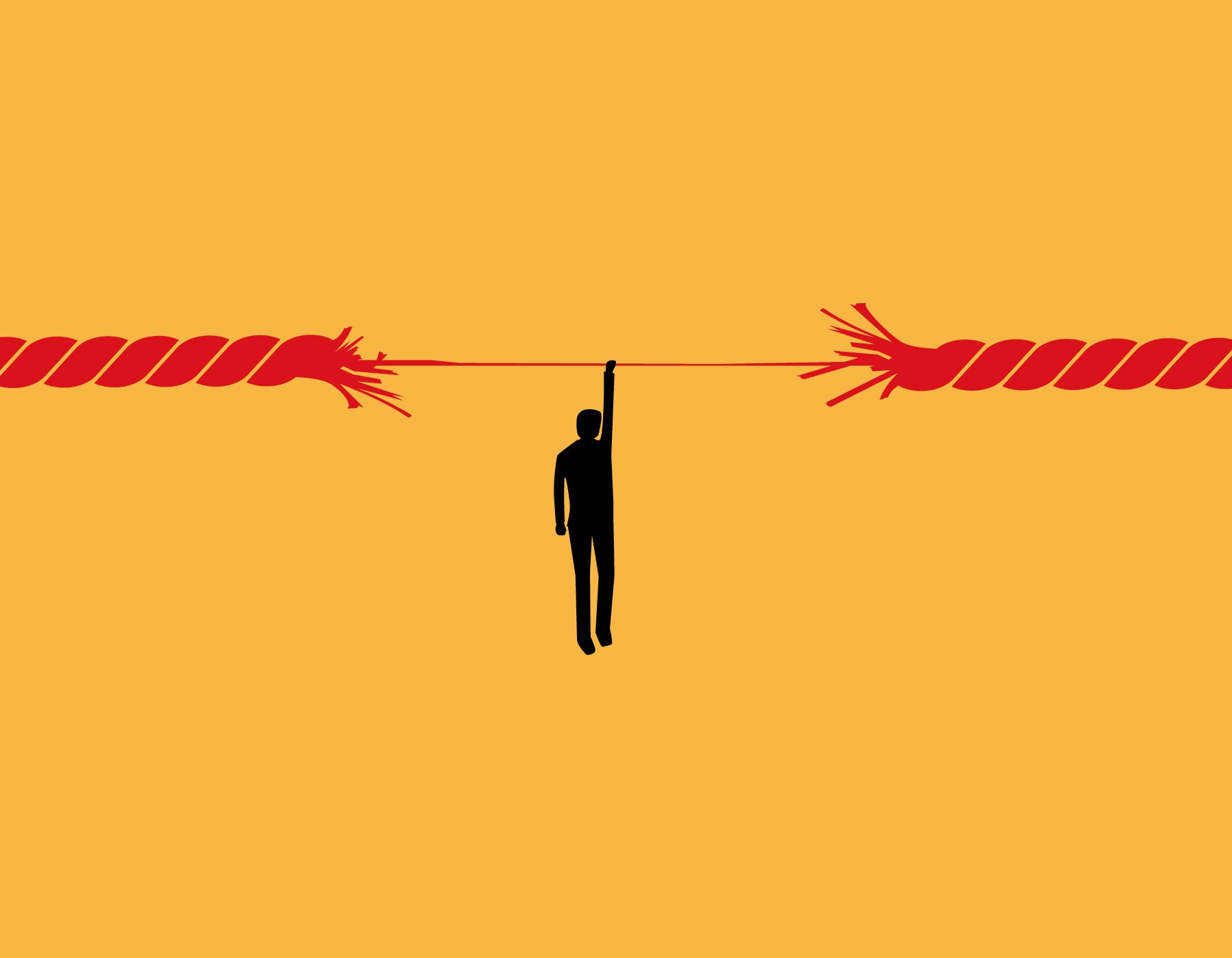
Employees can handle difficult truths far better than most leaders realize.
Those statements don’t eliminate fear, but they do eliminate unnecessary guessing. And that matters because employees can handle difficult truths far better than most leaders realize.
What they struggle with is uncertainty that goes unnamed. When communication leaves gaps, fear fills them.
But fear rarely stays fear for long. People begin making decisions. They update CVs. They call recruiters. They reach out to former colleagues. They delay commitments. They stop investing in long-term projects. They conserve energy. They begin preparing themselves and their families for a future they believe may be coming.
From a leadership perspective, this is where uncertainty becomes expensive. Employees who are unsure whether their jobs will exist in two weeks are unlikely to devote their full attention to work that may not exist in two weeks either. People stop taking risks, stop innovating, stop planning and eventually stop believing.
The loss isn’t just emotional. It’s operational. Productivity declines. Engagement drops. Momentum disappears. Trust erodes. And even if layoffs never occur, the organization often suffers many of the consequences anyway.
Offering context to build trust
Perhaps most damaging of all, employees begin questioning whether leadership understands the impact their silence is having. What executives may experience as a temporary communication challenge can become a defining trust event for the people living through it.
The leaders who navigate difficult seasons most effectively aren’t necessarily the ones with the best answers. They’re the ones willing to communicate honestly when answers don’t yet exist.
When leaders cannot provide certainty, they can still provide context. And context is often what allows people to keep moving forward.

When leaders cannot provide certainty, they can still provide context.
Sometimes leadership isn’t about certainty. Sometimes leadership is about helping people make sense of uncertainty without forcing them to carry it alone.
Because when leaders don’t help people make meaning, people will create meaning for themselves. And those meanings shape behavior. They shape trust. They shape commitment. They shape whether people continue investing their energy in the future they’re being asked to build.
The hidden cost of uncertainty isn’t fear. It’s what people do when fear becomes the most reliable information available.


