


Banks that grow fast often tend to collect non-performing loans on the way. However, United Arab Bank (UAB) has spent four years managing to avoid this. Its balance sheet expanded at high double-digit rates while non-performing loans fell from 8.2 percent at the end of 2022 to 2.8 percent by the end of 2025.
Having spent a good amount of time being a credit risk professionals before he took charge of UAB, deciding which loans a bank should and shouldn’t make, Shirish Bhide knew what to focus on.
Bhide began his career with Citibank in India in 1990 and stayed almost 19 years, a run that took him to South Africa and then Uganda. A stint at the National Commercial Bank (NCB) in Saudi Arabia followed, where he ran risk for the international business and helped integrate a Turkish acquisition.
“I was one of the youngest CEOs of Citibank Uganda at the age of 37,” he reveals. “I played a role in integrating the risk function into NCB as well in the four years that I lived in Saudi Arabia.”
He arrived in the United Arab Emirates in 2013 to become the first standalone Chief Credit Officer at First Gulf Bank, carrying that discipline through the merger that created First Abu Dhabi Bank. Across nine years there, he rose to Group Chief Credit Officer, chairing the apex credit committee and underwriting credit in 17 countries.
In June 2022, he joined UAB to lead its next phase of transformation and growth.
“What excited me was the opportunity to transform and then grow this bank in line with the vision that the board and the shareholders have for this bank,” Bhide tells The CEO Magazine.
Hiring on a promise
UAB had come through a difficult period, weighed down by legacy credit issues, accumulated losses and weak asset quality. Bhide’s first move was not financial.
“Without sounding immodest, if there is one skill I am proud of, it is putting the right people into the right roles,” he says. “For a CEO, that does more than half the job.”
“If there is one skill I am proud of, it is putting the right people into the right roles.”
He could not rely on scale, past performance or an established market position to attract talent. Some senior hires came because they knew and trusted him; others he had never met, but came convinced by his vision.
“All I could offer them was a role where one could leave a legacy behind,” he recalls.
With the team in place, Bhide rebuilt the balance sheet in sequence. An additional Tier-1 issue of US$150 million in 2023 laid the foundation. An oversubscribed rights issue of roughly US$280 million followed, lifting issued capital from US$561 million to US$841 million, and a senior unsecured term loan of US$272 million closed out the year.
Rebuilding the engine
Asset quality improved in step with the growth rather than trailing it. Non-performing loans reduced to 2.8 percent by the end of 2025, with provision coverage above 100 percent, while the balance sheet grew at a high double-digit compound rate without the addition of net new non-performing loans. For Bhide, that pairing is the test of a robust credit culture that is embedded in the first and second lines of defense.
“Growth is not difficult to achieve in the short-term if you lend indiscriminately,” he says. “The non-performing loans rear their head eventually.”
“All I could offer them was a role where one could leave a legacy behind.”
The market agreed in stages. Moody’s upgraded UAB two notches to Baa2, with further upgrades from Fitch and Capital Intelligence, carrying it from sub-investment grade to investment grade. Accumulated losses were cleared and retained earnings turned positive, and the share price roughly doubled within 18 months.
“The bank showed tremendous resilience on the fronts of asset quality, sustained growth and liquidity,” he says.
None of this was a bid for scale.
“We are happy to be a midsize bank that’s agile and that has tremendous external partnerships,” he confirms. “We aim to bring together all the relevant products and services using technology and human banking as a combination, because that’s really the package we’ve put together.”
A new chapter
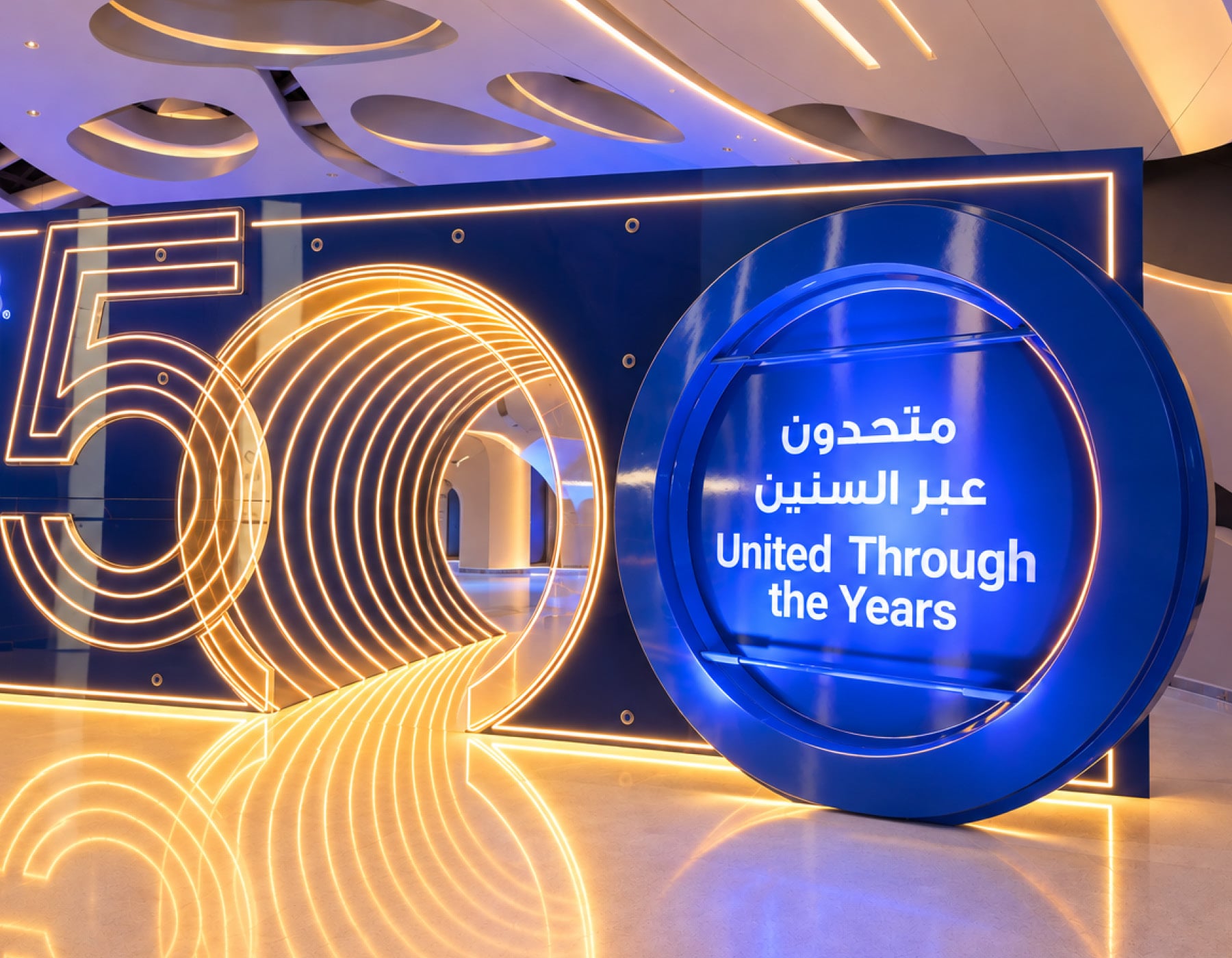
UAB operates in a highly competitive and advanced market that sees credit cards issued and usable digitally within minutes, as well as lending limits for smaller businesses that flex with daily point-of-sale takings. UAB is proud to stand tall in this vibrant environment as one of the oldest locally established banks, which celebrated its 50th anniversary in 2025.
Five or six partnerships underpin its success – loyal customers, core and scalable infrastructure, cybersecurity, payment processing and the credit risk engines behind its models and limits. Without them, Bhide points out, the bank couldn’t open in the morning.
“We’ve been careful in picking these partners based on our own assessment of needs and client needs and our strategic objectives,” he says.
“What makes the difference is the quality of our people.”
What Bhide will not claim is that any of it sets UAB apart. The United Arab Emirates is among the least bureaucratic and most advanced banking markets anywhere, and he is candid that the room to differentiate on technology alone is thin.
“We have the same products and services,” he says. “What makes the difference is the quality of our people.”
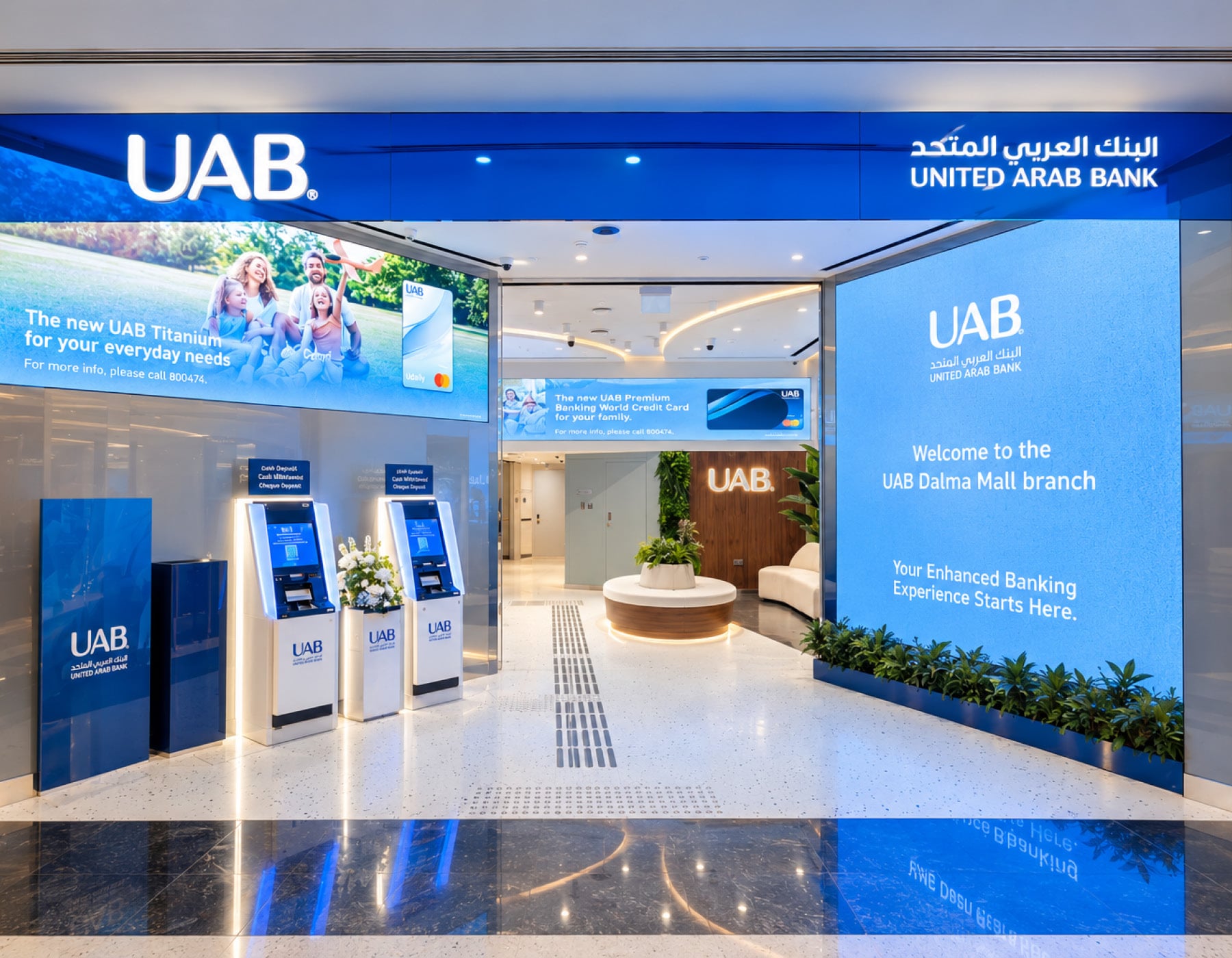
He is specific about what that means. A customer who wants to speak to someone should reach an empowered person who can solve the problem, not a phone menu and a bot. Younger customers especially, he notes, have no patience for either. He can build a resilient bank from a head office point of view, he adds, but one poor exchange at a branch counter undoes all the goodwill.
“Those are the points of contact where you make or break the user experience,” he explains.
With more than 50 banks in the country, clients no longer stay put from habit. Bhide reads that as an opening rather than a threat.
“I believe this actually presents an advantage for midsize banks like us, which are agile and have the right products and services, the right caliber of people and deliver on our promises,” he says.


