

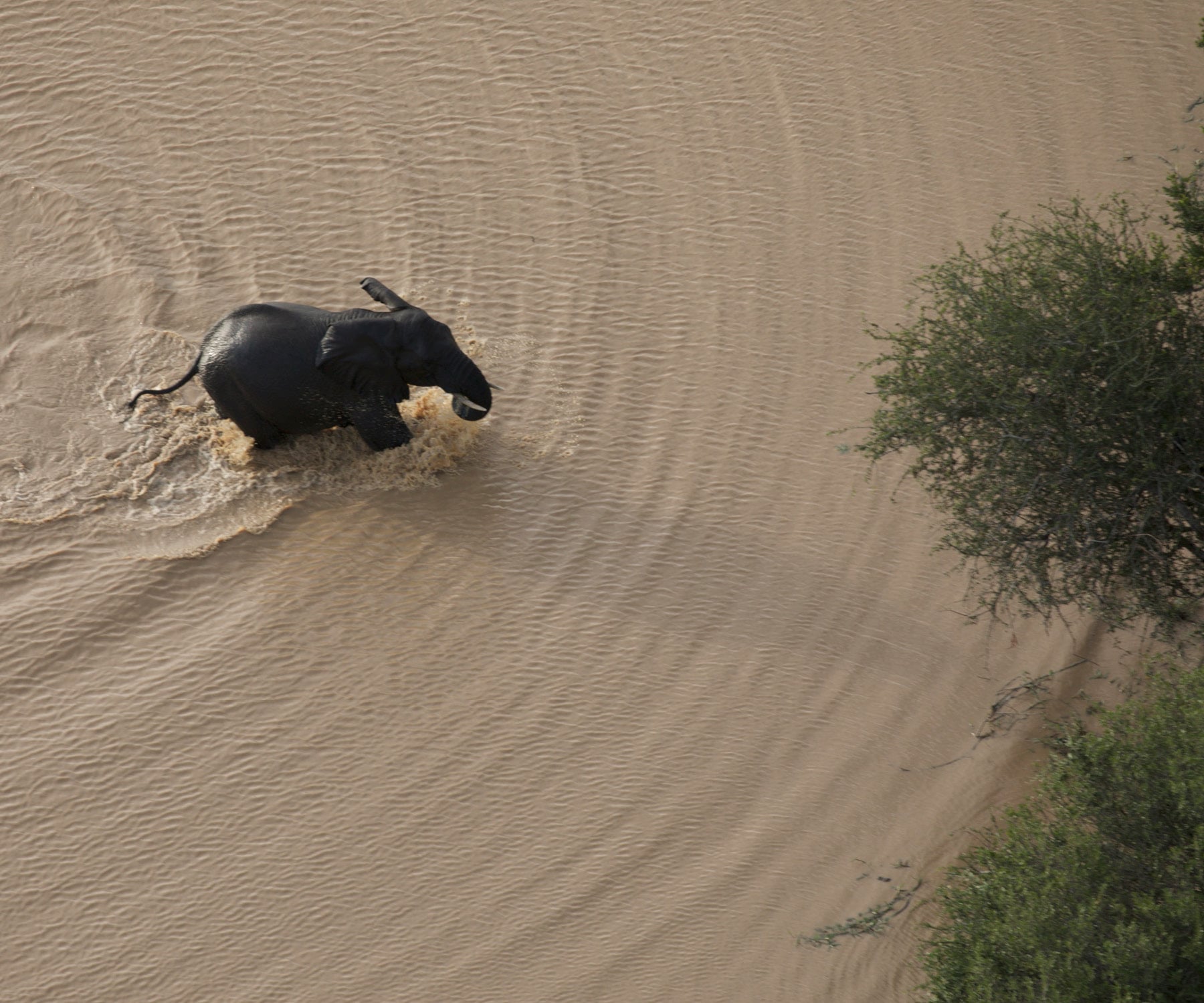
The R44 Raven II helicopter hovered, a glossy red mosquito in an open blue sky, as I hung out of it photographing a large elephant about 30 meters below.
Water slithered off its back as it forded a swirling brown lake swollen by rains and ambled up a long hill after the rest of the herd – a meandering gray ribbon threading an emerald landscape, tiny babies hugging their mothers’ shanks.
It’s an ancient African sight, a way of life that now exists in shrinking pockets and often only because it is protected by eye-watering chunks of cash.
Money is not enough
However substantial these donations, they are inadequate to meet the challenges confronting African wildlife and wildness, which accounts for 25 percent of global biodiversity.
Poaching, population growth – Africa’s population has almost doubled since 2000 to approximately 1.59 billion and is expected to reach 2.5 billion by 2050 – and habitat loss all contribute to human–wildlife conflict, but they are overshadowed by climate change and political instability.
A 2020 United Nations report concluded that all 20 of the biodiversity targets agreed in Aichi, Japan, were missed, highlighting funding gaps and damaging subsidies as significant factors. In January 2026, a United Nations Environment Programme report found that for every US$1 the world invests in protecting nature, it spends US$30 destroying it.
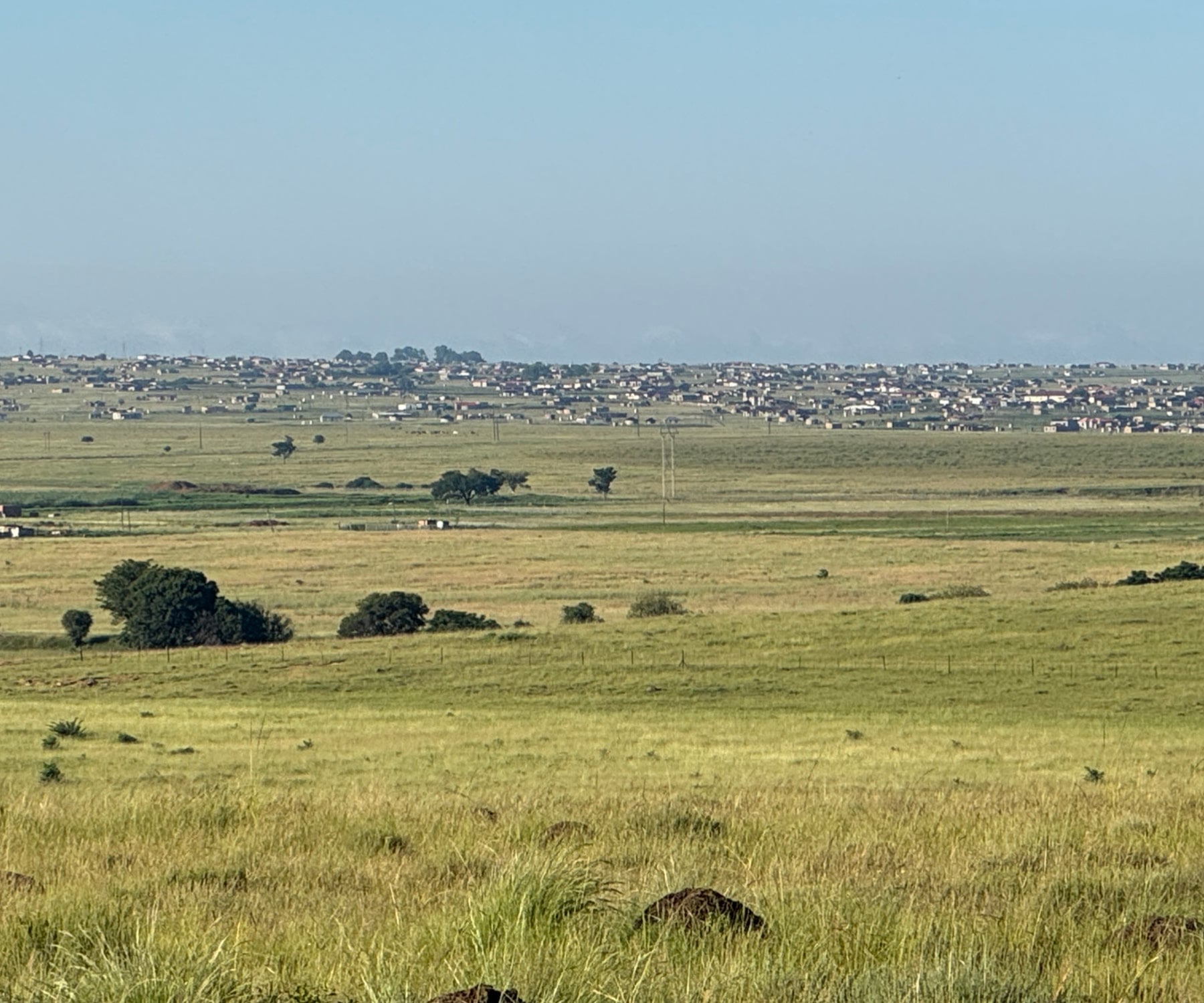
“Real progress means accepting that the land has changed and involves local communities and rethinking how we live with nature.”
- Guillaume Bonn
The situation is critical. World Wide Fund for Nature’s 2024 ‘Living Planet Report’ found that Africa’s monitored vertebrate wildlife populations have fallen 73 percent in just over 50 years.
Big Five populations are crashing. Elephant numbers have fallen from between 10 million to 415,000 in a century, while lion populations have declined by 50 percent in 25 years and vanished from 94 percent of their historic range.
French-Madagascan Guillaume Bonn spent two decades photographing Africa’s shrinking wildness. In his book Paradise Inc, he wrote:
“Conservation needs a reality check. No longer can we rely on romanticized ideas or outdated conservation models. Wildlife no longer roams freely. Real progress means accepting that the land has changed and involves local communities and rethinking how we live with nature. Conservation must evolve. Without inclusion and realism, even the best intentions will fail.”
The question is how?
The complexity of philanthropy
Long before the crisis hit public consciousness, several visionary United States and European families were working to protect at-risk environments long-term.
“These families don’t shy away from problems, but even their pockets are not infinite,” says Paul Milton, whose eponymous company, Milton Group, manages their philanthropic investments.
Donor-funded conservation is vulnerable to the vagaries of wealth and global events. Sophisticated tax programs encouraged American and European investors, but second generations and emerging markets are not so philanthropic.
African tourism investment, often led by private capital, is unpredictable, Milton says. A pandemic, a bomb, a kidnapping. Bookings plummet.
“A new approach is required that underpins environmental and community needs with long-term economic sustainability,” he notes.
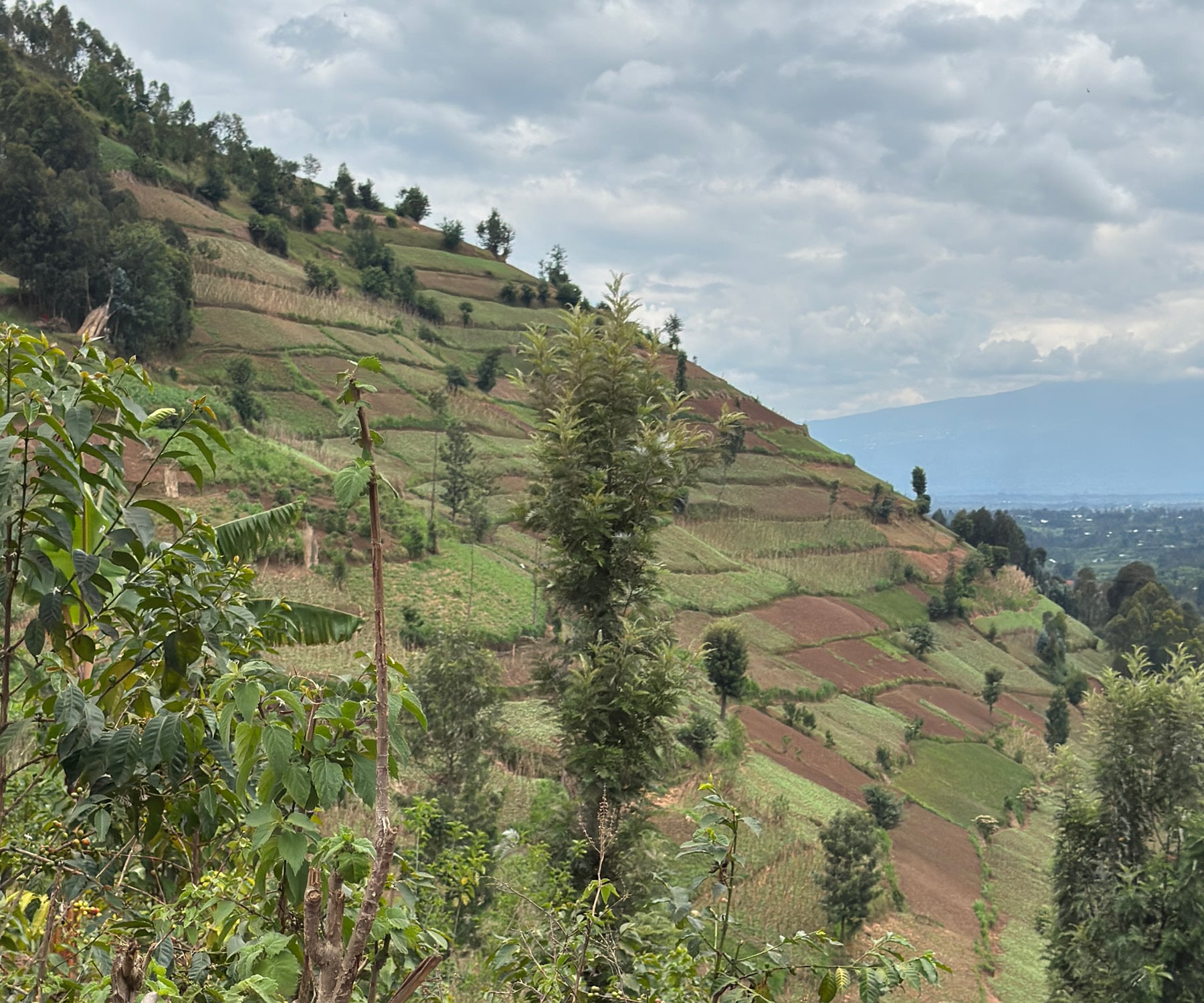
“Find a place that’s unloved, provide capital, try and convert it to eco-tourism and let Mother Nature do her thing.”
- Paul Tudor Jones
Hedge fund manager Paul Tudor Jones makes the formula sound deceptively easy.
“Find a place that’s unloved, provide capital, try and convert it to eco-tourism and let Mother Nature do her thing,” says Jones, who has invested philanthropically across Zimbabwe, Zambia, Tanzania and now Mozambique.
“Find wild places next to national parks where you can have a large-scale terrestrial impact… Then replicate it, so it has the Michael Jordan effect. Make it the best it can be, so everything around it gets an uplift too.”
But with populations growing exponentially, he warns, the work must be done fast – and prioritize the community.
Building an investment-driven economy
Milton acknowledges lessons learned the hard way.
“Kick-starting a circular economy where local communities are largely subsistent means creating markets in agro-industry, forestry and farming and considering all aspects of humanitarian welfare from education, health, women’s empowerment and employment. Carbon monetization has joined the fray,” he explains.
He invites me to Mozambique, to Karingani Game Reserve, of which he is CEO.
The 150,000-hectare reserve shares an 84-kilometer border with South Africa’s Kruger Park in the Greater Limpopo Transfrontier Conservation Area.
Historically challenged by land tenure disputes, poaching, charcoal production and civil war, it is now the focus of an ambitious attempt to marry conservation with private investment.
“You can’t build a sustainable tourist plan on US$100 a night.”
- Paul Milton
Already, US$100 million has been spent paving the way for five prestigious hotel brands, including Aman, making its debut in sub-Saharan Africa. Their 25-year management contracts will cost Karingani millions more over the next 15 years.
“But it’s worth it. It guarantees occupancies and profitability,” Milton says. “You pay for global marketing to unlock that top three percent of high-net-worths.”
Mozambique is not an obvious choice. Despite 2,500 kilometers of pristine white beaches, iconic national parks and a marine ecosystem containing the last surviving East African dugong community, civil unrest and political instability have kept parts of the country off Western travel advisory lists.
More challenging still are the grumblings on the streets of Maputo. In a country rich in minerals, coal, gold, rubies and natural gas, people ask why so little wealth reaches them.
Mozambique is one of the world’s poorest countries, with an average age of 16.4 and high unemployment. At Karingani, where there is no market to kick-start a local economy, it’s 65 percent.
Working with local governments
Enter Milton and his band of billionaires.
In 2018, Milton Group signed a Memorandum of Understanding to deliver the country’s largest terrestrial and marine tourism conservation destination and appointed the former Director General of The National Administration for Conservation Areas (Administração Nacional das Áreas de Conservação), the government’s environmental agency, as Executive Director.
Recognized by CITES, UNESCO and National Geographic for his work, Mateus Mutemba cut his teeth on Mozambique’s iconic Gorongosa National Park. Its 4,000 square kilometers are managed by the Greg Carr Foundation in partnership with the government.
There is little Mutemba doesn’t know about protecting large, landscape-changing projects.
Fast-tracking me through Maputo’s airport, he points out three posters featuring a pop star with dreadlocks, Mozambique’s former President and a pangolin. The government-sponsored conservation campaign carries a powerful message: “Poaching steals from us all.”
To understand the complexities, however, is to dive deep into the bush.
Karingani’s operational headquarters are a hive of activity. Mechanics pore over Toyota trucks, while locally employed builders, electricians and plumbers construct a canteen, health clinic and accommodation for 100 laborers.
At Kurhula, its 22.2-hectare farm employs another 49 people, and agricultural technician Mr Sambine has created organic compost from dung and crushed shells.
It helps ensure that water piped into adjacent villages is no longer contaminated – and doesn’t require a daily kamikaze run to collect water from a reservoir patrolled by crocodiles.
Karingani has also built 150 kilometers of fencing, 75 kilometers of electricity lines and 600 kilometers of road.
“Tourism can be conservation’s worst enemy, negatively impacting the environment that first attracted the market.”
- Paul Milton
An old military airstrip is being transformed into an international airport to fly guests directly from Johannesburg.
“You can’t build a sustainable tourist plan on US$100 a night,” Milton says. Acknowledging the elitism, he argues, “The guest who spends US$50,000 a week can write a donation check for US$25,000.”
But his bigger concern is what happens when tourism succeeds.
“Tourism can be conservation’s worst enemy, negatively impacting the environment that first attracted the market,” he explains.
He points to the Serengeti, where a thriving tourist economy has created other problems.
“When we arrived, there were dark skies. Now you can see neon signs on a petrol station 30 kilometers away.”
Milton calculates that Karingani’s projected 1,500 employees implies a 10,000-strong electrified urban community on the reserve’s borders.
Growth corridors, infrastructure, land use, water, power and education must all be planned from the beginning.
“It’s Smart City thinking,” Milton says, acknowledging an uncomfortable question.
Managing the inevitable conflicts
Isn’t this nuanced colonialism – large land buy-ups undertaken with insufficient understanding of what it means to live in the African landscape?
Karingani has had to move people out of its reserve.
“There’s no clever way of managing the elephant problem in Africa other than fencing out communities to protect their crops,” Milton says.
Bonn is unconvinced.
“That’s been the response to threats like rapid urban expansion and population growth, but I’m not convinced this approach will work in the long run,” he says.
The argument stands stark in Uganda’s Queen Elizabeth Park.
When I Instagrammed a photograph of an elephant straddling a crash barrier on the outskirts of a fishing village, readers pitied the animal. That night I lay in bed listening to deterrent shots from rangers trying to protect my neighbor’s shamba.
They failed.
“It’s difficult to comprehend the truth of what happens when an elephant destroys a farmer’s annual crop in the space of an hour. There’s no Waitrose down the road,” Milton says.
In Tanzania’s Serengeti, locals are putting up fences themselves. Mozambique is considering a massive program of fenced elephant corridors.
“It’s political,” Milton says. “People are dying.”
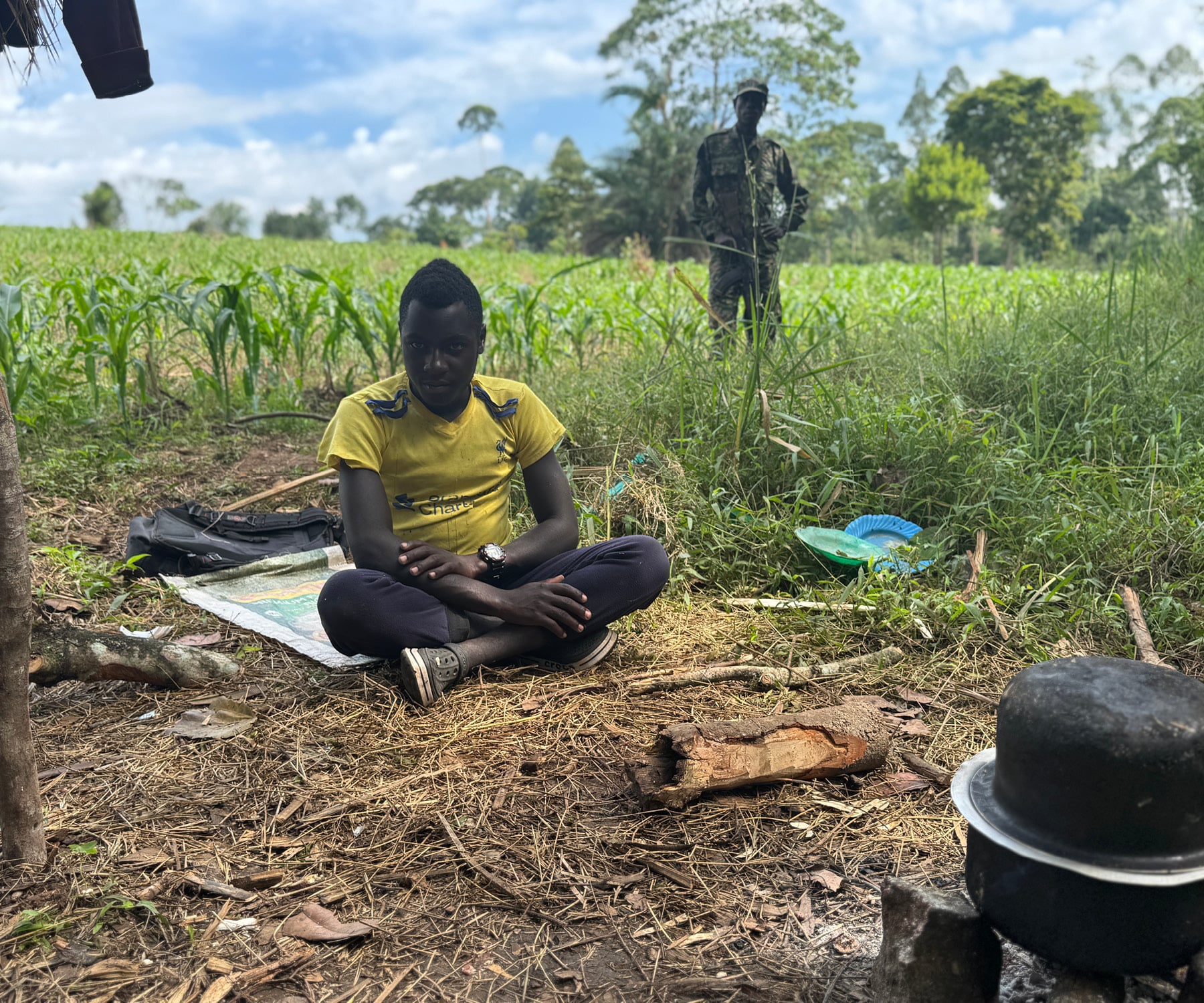
“It’s difficult to comprehend the truth of what happens when an elephant destroys a farmer’s annual crop in the space of an hour.”
- Paul Milton
Human–wildlife conflict is only one challenge. Land tenure is another.
Karingani’s local communities – 34,000 people in 10 villages – signed over their rights in return for promised investment in infrastructure, water and jobs that never materialized under previous ownership.
“Promises set false expectations. There is discontent because we’re slow and late. Until we’ve opened a hotel and employ 400 local people, I don’t think they’ll believe we can deliver,” Milton says.
“Every Tuesday I give our partners bad news. Any normal-thinking, risk-adjusted investor would say, ‘What are you smoking?’ But these people have desire, mental capacity, experience and the resilience to know what it takes to affect change.
“We have no debt, just long-term, well-resourced purpose and vision. Private capital is the only way you can kick-start a market.”
The test is whether money can translate into opportunity for the people living alongside the wildlife.
Public–private partnerships for progress
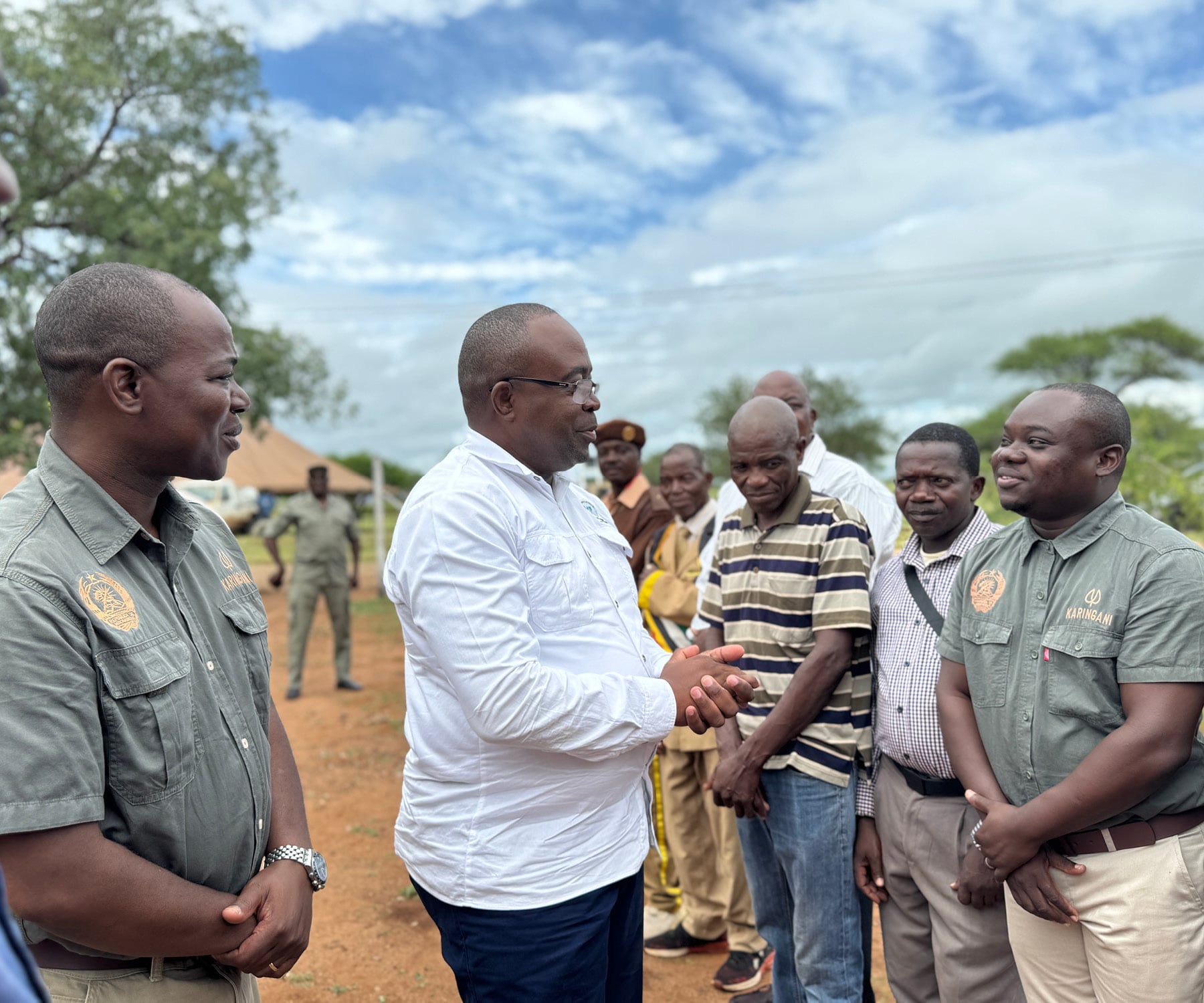
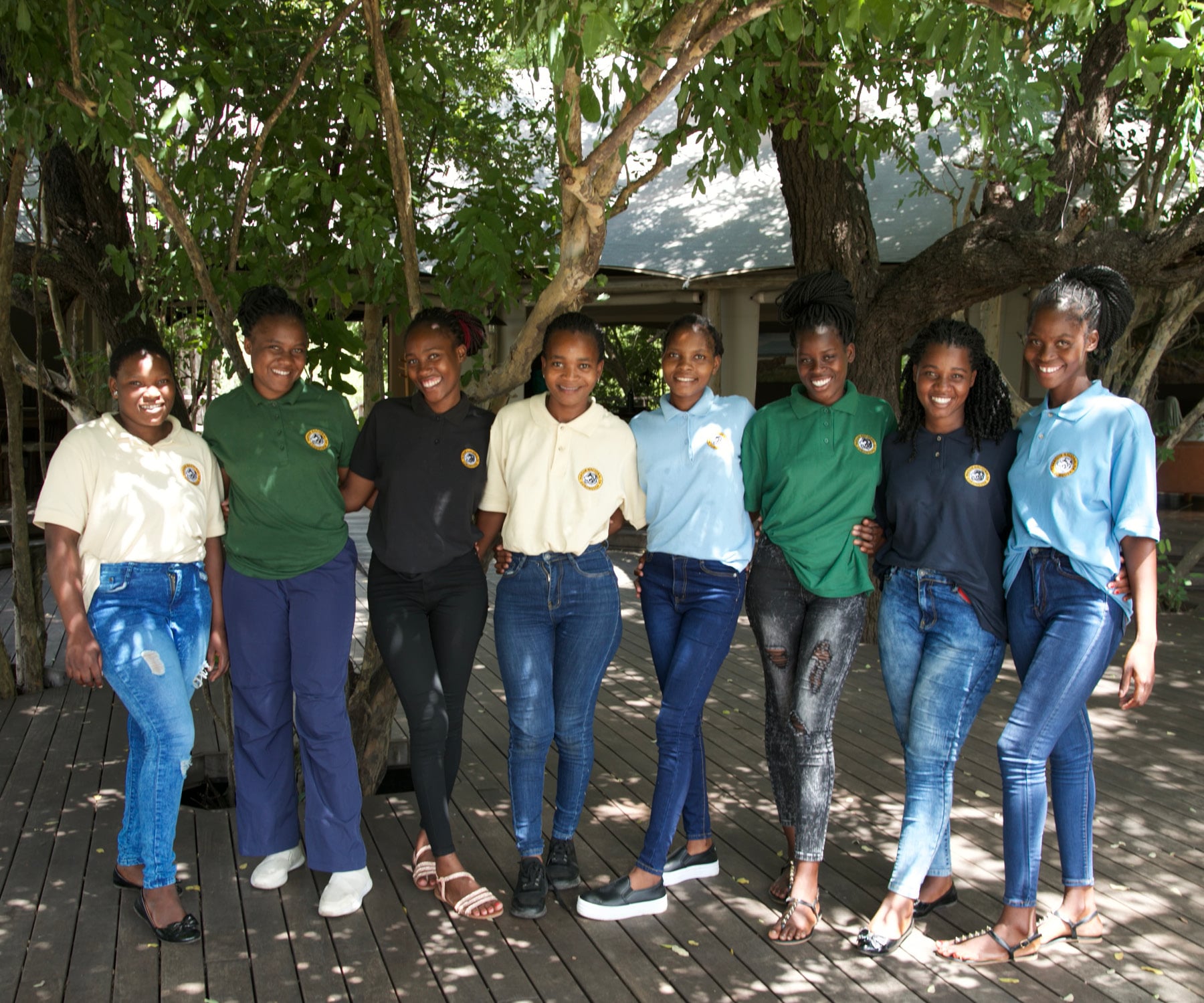
Grass bends as the mosquito lands beside a sand-colored marquee where a ceremony is welcoming home Karingani’s inaugural cohort of 23 scholarship graduates returning from a year’s hospitality and guiding training at the South African College for Tourism (SACT).
Sonia is one of 46 parents flown into South Africa for the well-publicized graduation day. Her green dress shivers with passion as she tells her community about her first taste of ice cream, exhorting other parents to keep their children in school.
“I sold 14 cows to pay for their education. People thought I was a joke, but now my daughter has bought me a motorbike,” she says.
“If you want to change the world, keep girls in school,” is Greg Carr’s motto.
The multimillionaire who made a fortune from answering machines arrived at Gorongosa in 2004 after hearing about the Mozambican park devastated by civil war.
Signing 25-year contracts with four government departments, Carr has invested US$100 million and his time.
Today, Gorongosa is considered a flagship for conservation and community work within a public–private partnership.
Its international scientific research center has its own master’s program, attracting scientists from universities including Cambridge, Stanford and Yale.
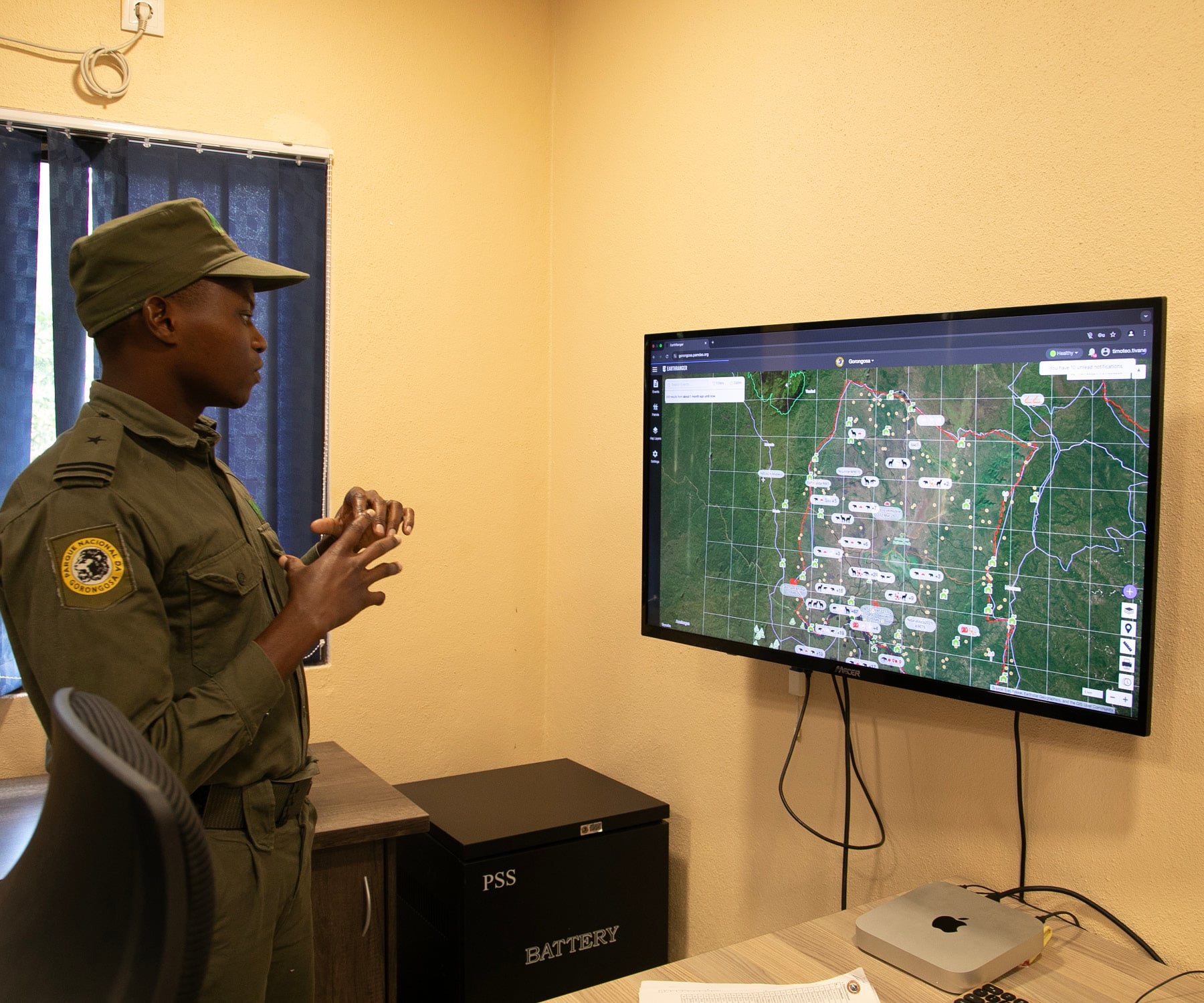
“If we want lasting solutions, we need to involve the people who live near these protected areas.”
- Guillaume Bonn
Karingani and Gorongosa are collaborating, exchanging skills and strengthening wildlife gene pools through translocation and reintroduction.
Karingani sent a pack of endangered wild dogs, while Gorongosa is employing eight of Karingani’s SACT graduates.
“Intuitively, Carr understood the importance of collaboration – his first action was to ask the local villages what they needed,” Milton says.
It worked. Some 300,000 people live in the park’s buffer zone. There is no fencing, but there is also no poaching.
The locals understand the value of the magnificent beasts who bother their lives. They hang beehives along high lines because elephants hate being stung.
But elephants are clever. Discovering bees’ slumber at night, they raid after dark. Elsewhere, they have learned to fill in trenches.
Managing a coexistence of species
It’s this complexity that can be missed in grand-scale conversations.
“Many community programs don’t work,” Milton admits. “It’s a dilemma, because it means private capital investment isn’t making money. So donors are not as generous the next time. It’s often to do with applying Western techniques. We aren’t local enough.”
“If we want lasting solutions, we need to involve the people who live near these protected areas. They must have a voice in shaping the future, because real conservation can’t succeed without them,” Bonn says.
Milton, Mutemba and Carr agree.
“Ensuring local communities are benefiting is critical to the long-term success and sustainability of any initiative.”
- Charlie Mayhew
In 2018, Jones and the Milton Group sponsored a daylong roundtable at Buckingham Palace hosted by Prince William, Royal Patron of Tusk Trust, a United Kingdom-based African wildlife charity that annually plows US$16 million into conservation projects.
It was a call to arms among conservation thought leaders seeking a new, economically sustainable model.
“Conservation is so often about collaboration and securing donors bold enough to take an initial, calculated risk to kick-start a project,” Tusk Founder Charlie Mayhew says.
“Ensuring local communities are benefiting is critical to the long-term success and sustainability of any initiative.”
Flying back from the ceremony that evening, the scarlet mosquito circled in a fading sun, turning to find a herd of buffalo and catch the white of a leopard’s tail. Then, seeing the elephants again, the pilot dipped low – too low for my liking.
I felt their stress. The matriarch stopped, raised her trunk and trumpeted, flapping her ears in defense of her herd.
She wanted us to leave her alone.


