

There is an old joke in the energy sector that industry and academia are divided by a common subject. The operators have the data but no time to study it. The researchers have the rigor but wait years for access. Each side quotes the other selectively and, for the most part, they meet twice a year at a conference and agree to stay in touch.
Dr Nikhil Jayaraj decided the divide was a habit rather than a law of nature and has spent the better part of a decade dismantling it from both ends.
Bridging the gap
By day Jayaraj is CEO of Regen Power, the Perth-founded company rated by SunWiz as the number one solar installer in Western Australia and second in the country. The rest of the time he is a Research Adjunct at Curtin University’s Faculty of Business and Law, Partner Investigator on an Australian Research Council Linkage project, Principal Investigator on a company-funded research program and the reason five PhD scholars are working on Australia’s battery problem today.
Ask him which role is the real one and he refuses the premise.
“Customers, research and policy. That’s the point where enterprise and academia intersect, and it’s where I have chosen to work,” he tells The CEO Magazine. “Most solar executives sell systems. I also generate the evidence the country is making its decisions on and then I give it away.”
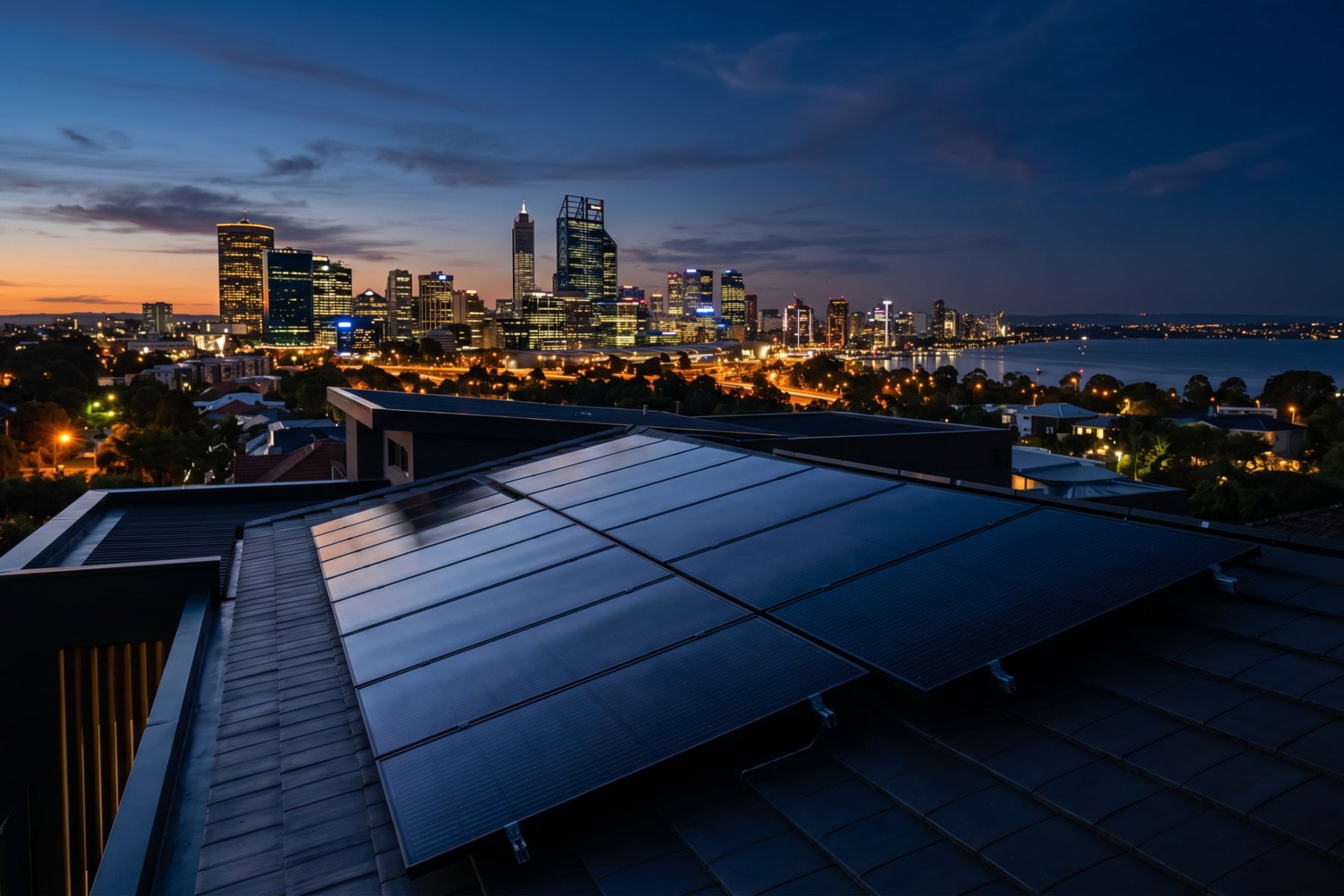

The instinct has deep roots. Regen Power was founded in 2003 by the late Chem Nayar, a Curtin engineering professor who saw no contradiction between the laboratory and the market. Jayaraj arrived in 2010 with a master’s degree and worked through sales, business development and operations before becoming CEO in 2018.
Since then, the company has recorded revenue growth of around 700 percent, including 60 percent in the past 12 months alone, with net profit growth of well over 1,000 percent. More than 45,000 Australian homes now run on its systems. That amounts to 350 megawatts of distributed generation and several thousand household batteries across licensed operations in five states.
The numbers would satisfy most chief executives. Jayaraj kept noticing what they couldn’t explain.
Finding storage solutions
Australia had built the highest rooftop solar penetration in the world, yet only a small fraction of those solar homes had added a battery. Everyone in the industry had a theory, but nobody had evidence. So while running the company, Jayaraj enrolled in a Doctor of Business Administration at Curtin and interviewed more than 50 participants across the solar and battery market, from householders to policymakers, to learn what was holding storage back.
His research pointed to a clear conclusion: without targeted policy support, adoption would stay stuck. Not long after his doctorate was conferred, Australia’s household battery rebate became a reality.
“That was the moment the two halves of my working life stopped being separate,” he says. “The research question came off our own rooftops and the answer went back into national policy. Once you’ve watched that loop complete itself, you can’t go back to guessing.”
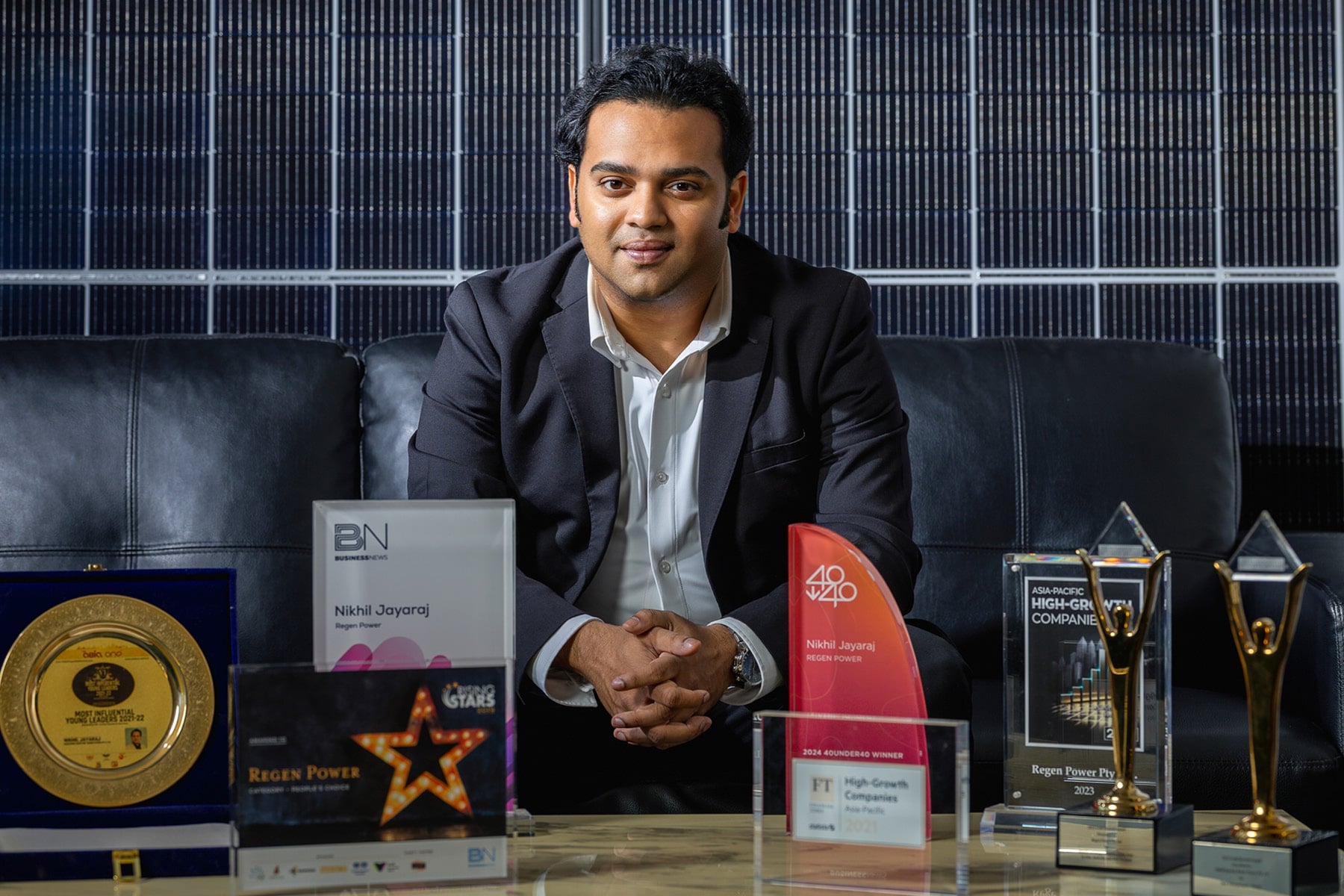

Rather than treat it as a one-off, he industrialized it. The vehicle is what the company calls the Regen Research Lab and in the space of a single year, it secured three national research programs. An Australian Research Council (ARC) Linkage project is developing an AI platform to manage the whole consumer battery journey, from sizing through operation and degradation to end of life in one system; nothing comparable exists in the domain.
A second project within the ARC’s Industrial Transformation Training Centre for net zero buildings is turning the company’s installation dataset into a decision platform for solar and battery procurement.
The third, funded entirely by Regen Power under the R&D Tax Incentive, is a technical query system that answers homeowners’ questions on rebates, tariffs and connection rules, with every response tied to a cited regulatory clause and held to published accuracy thresholds.
“People ask why a solar retailer would put its own capital into university research,” Jayaraj says. “My answer is that the industry needed an evidence base and nobody else was going to build one.
“Sustainability begins within the business. We can’t sell renewable energy if our own model isn’t sustainable – financially, operationally and ethically. The same logic applies to knowledge.”
Sharing knowledge
What Jayaraj does with the findings says the most about the philosophy. They are published openly so that everyone has access – competitors included. Alongside the funded programs, the Lab is running a longitudinal study tracking the real effect of Australia’s battery rebate on stakeholders through its first two years, as well as a five-country study of how electric vehicle uptake shapes solar and battery adoption across Australia, India, the United Arab Emirates, Malaysia and China.
Australia is further down the household electrification road than almost anywhere on Earth. Whatever happens here – from rebate design to grid behavior to consumer trust – is a preview of what dozens of countries will face next. Somebody has to write the playbook.
That conviction has carried Jayaraj well beyond Perth. He serves as a strategic consultant to the United Nations Environment Programme, representing that evidence at international forums. Much of that work happens behind closed doors and he is careful not to overstate it. He has delivered keynote addresses at 35 conferences across 15 countries and published more than 10 articles in first-quartile journals, including Energy Policy.
“When I sit in an international policy discussion, I’m not carrying opinions. I’m carrying what 45,000 Australian rooftops have taught us,” he points out.
“A regulator in another country doesn’t need my enthusiasm. They need to know what worked, what failed and what we would do differently. That is what evidence is for.”
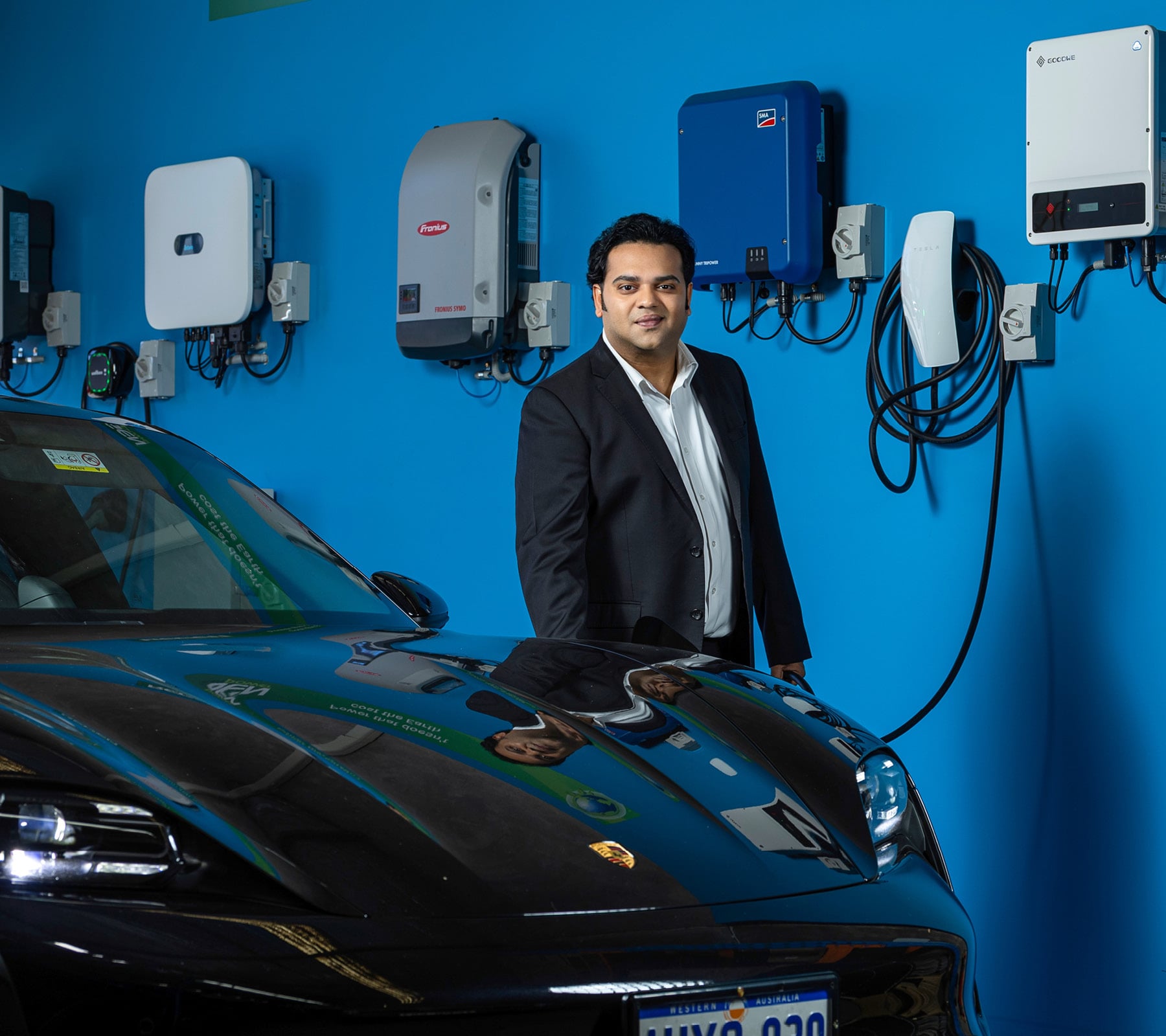

Back home, the bridge keeps paying for itself in commercial terms. Growth has been built on trust rather than discounting: a 15-year workmanship warranty against an industry standard of 10, a 4.9-star customer rating and the ProductReview award six years running.
The market has noticed, too. The Australian Financial Review has ranked Regen Power the 55th fastest-growing company in Australia, while the Financial Times has named it in the Asia–Pacific High-Growth 500 four times in a row. The research feeds the offer and the offer funds the research.
This momentum also carries people, not just findings. More than 50 students have come through the company’s internship program, with a structured pathway from internship into full-time graduate positions. Jayaraj, who walked in as a fresh graduate himself in 2010, regards it less as a program than a repayment.
There is a pleasing symmetry in where it has all landed. A company started by a professor who refused to pick a side is now led by a CEO funding five doctorates while pursuing market leadership in every state where the business operates. The gap between industry and academia never closed on its own, Jayaraj argues. Someone had to stand in it.
“Australia has the sunlight, the science and the spirit. What we need now is the consistency to connect them,” he says. “That’s the company we’re building. The rooftop teaches the research, and the research earns its way back onto the rooftop.
“Keep that loop turning for long enough and you stop noticing where the enterprise ends and the academy begins.”


